
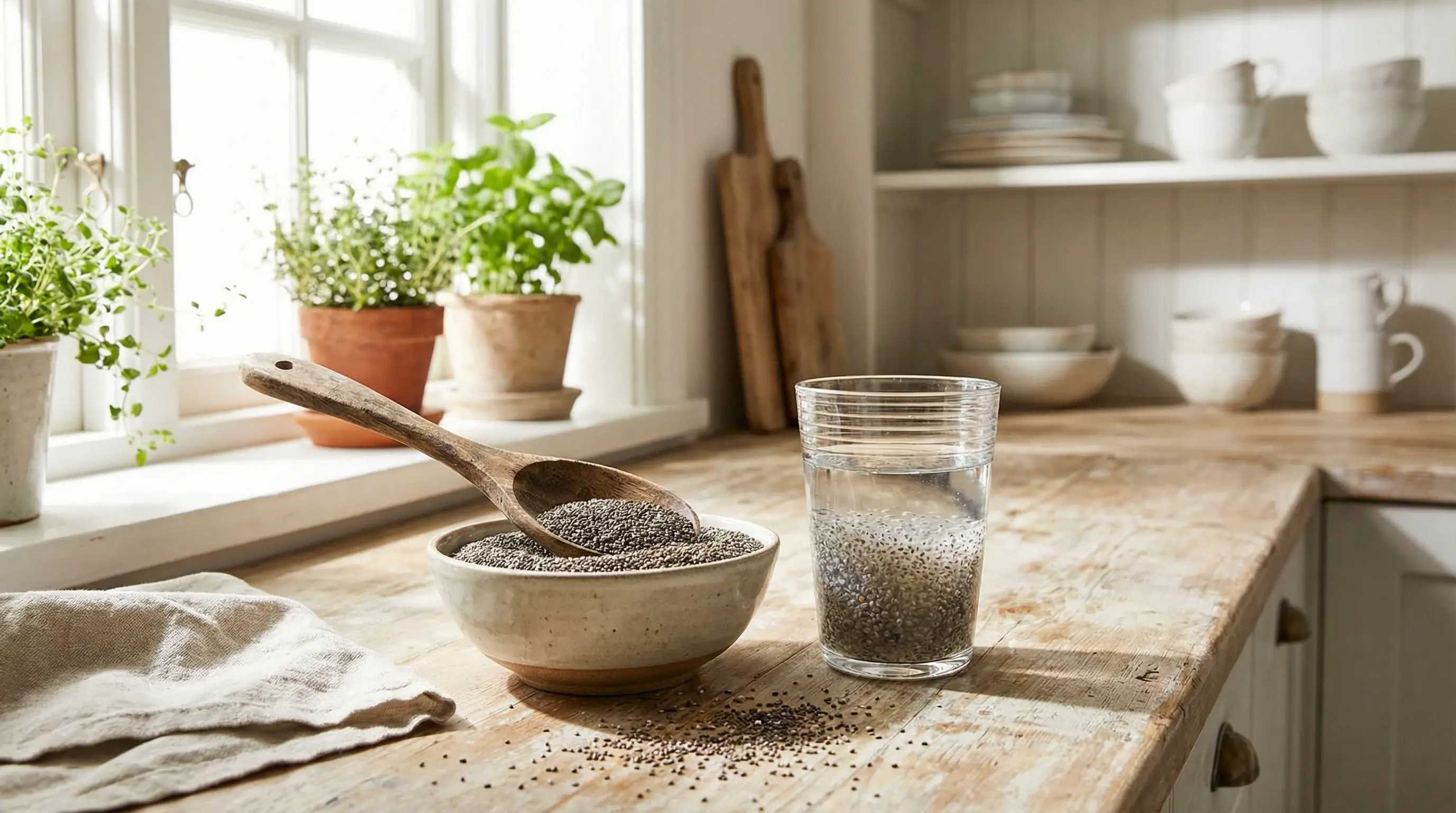
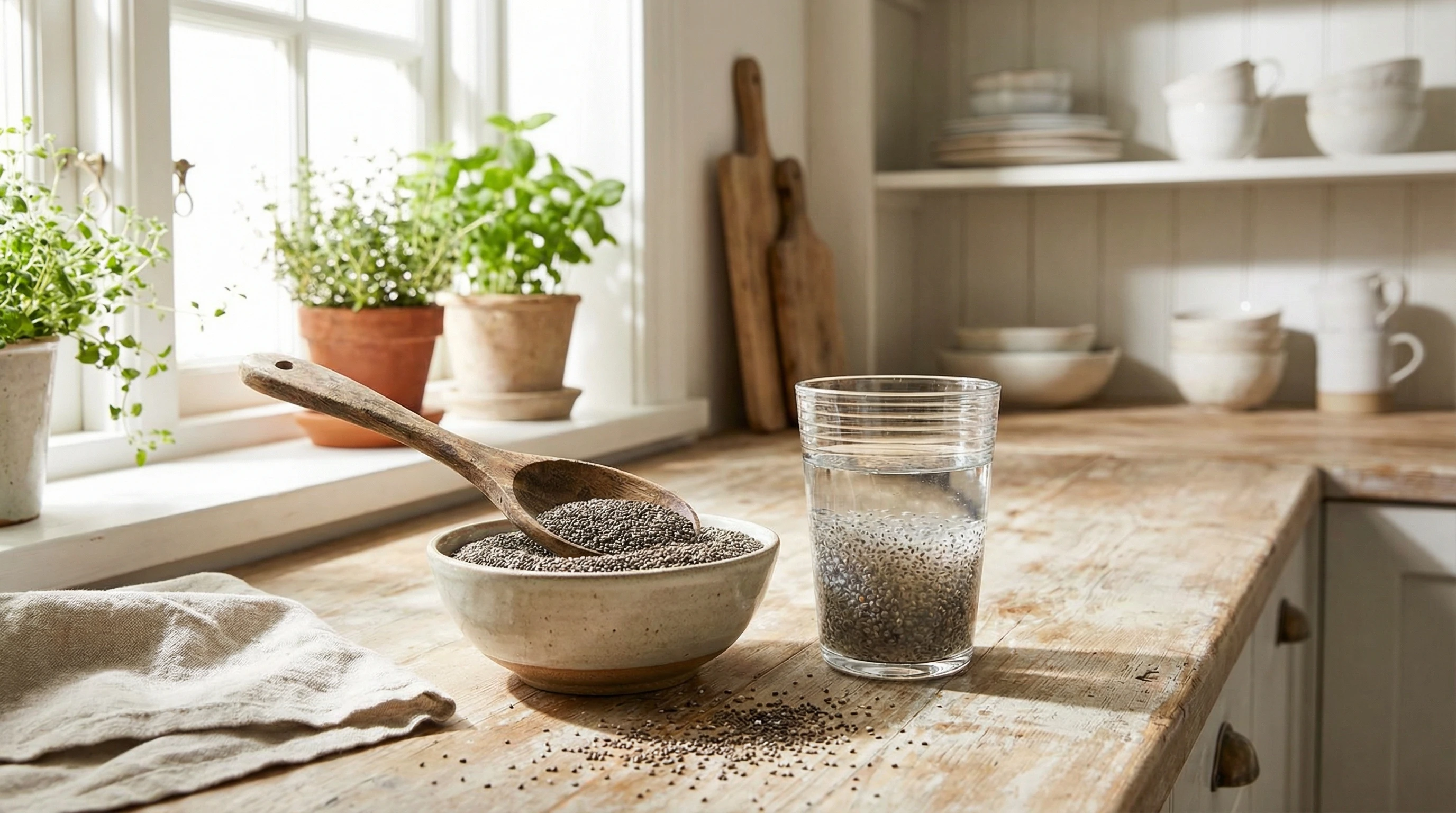
Chia seeds might look tiny and unassuming, but they’ve earned a spot as a favourite in all sorts of healthy eating plans, especially for women going through midlife changes. I find chia seeds really easy to use, whether you’re tossing them in a smoothie or making overnight oats, and they pack a lot of nutrients into a small scoop.
Midlife can bring its own unique health changes. For some, shifting hormones might bring new aches, hot flashes, and different energy levels. For me it also included a diagnosis of Rheumatoid Arthritis. Because of that and a family history of heart disease and dementia, I’m always on the lookout for simple foods with research-backed health benefits for midlife, and chia seeds tick a lot of boxes. They’re well known for being high in fiber, protein, healthy fats, and several important micronutrients. That might sound technical, but basically, they offer quite a few perks for midlife women, especially when it comes to inflammation, brain and heart health, and supporting healthy weight and digestion.
Here’s my go-to guide on how chia seeds can help support women’s health during midlife. I’ll share what’s actually in them, how they might help, and a few ways to make them part of your routine without any fuss. Let’s get into why these seeds are worth your attention!
1. What Makes Chia Seeds a Healthy Choice?
Even though they’re small, chia seeds are loaded with important nutrients. One tablespoon delivers:
- Lots of fiber (about 5 grams per tablespoon, a big reason they’re so filling)
- Plantbased omega-3 fatty acids, especially ALA (alphalinolenic acid)
- High quality plant protein (around 2 grams per tablespoon)
- Key minerals like calcium, iron, magnesium, phosphorus, and zinc
The best part? They don’t have a strong flavour. I find them almost invisible in things like oatmeal, yogurt, or even baked goods, so you get all these benefits without needing to cook up anything fancy. Chia seeds are also gluten free and perfect if you’re sensitive to wheat or looking for allergen friendly foods.
2. Chia Seeds and Inflammation Reduction
Managing inflammation is really important in midlife. Chronic, low grade inflammation tends to show up with hormonal changes and can make symptoms like joint aches and soreness worse. One of the best things about chia seeds is their high omega3 content. Omega3s, especially from plants like chia, have been shown in several studies to help the body manage inflammation (source).
How Chia Seeds Help With Inflammation
- Omega3 Fats: Chia seeds are one of the best plant sources of ALA, an essential omega3 fatty acid that inhibits inflammation and helps reduce the risk of cardiovascular diseases and inflammatory arthritis. This is especially important for midlife women as the occurence of these related chronic conditions increases after menopause.
- Antioxidants: Chia seeds also contain antioxidants, which help protect cells from damage caused by inflammation.
I add chia seeds to smoothies or sprinkle them on top of salads after workouts to help my body rebound. The fiber also helps keep your gut healthy, and there’s a lot of research connecting gut health with managing inflammation, especially for women going through hormonal changes. On top of that, feeling less sore or stiff can keep you moving and enjoying your daily routine.
3. Heart Health Support for Midlife Women
Heart health for women becomes a bigger priority around menopause as we lose the heart protective benefits of estrodiol. Dropping estrogen can affect cholesterol and blood pressure numbers, and small food tweaks can make a real difference over time. Chia seeds support heart health in a few ways, and their benefits grow with regular use:
- Omega3s and Cholesterol: ALA from chia seeds may help raise “good” HDL cholesterol and lower “bad” LDL cholesterol (source). This happened to me after I began regularly eating my favorite chia pudding for breakfast.
- Fiber for Blood Sugar and Blood Pressure: All that fiber in chia seeds slows down how fast sugar is absorbed from your food. That can help keep blood sugar balanced and prevent the crashes that leave you feeling shaky or hungry. Many studies also link fiber intake to lower blood pressure and a healthier heart.
- Plant Protein: Plant based diets (or even just swapping in more plant proteins into your meals) are well studied for supporting a strong heart, and chia seeds make an easy add on for extra protein.
I like to stir chia seeds into breakfast bowls or even homemade salad dressings for a little heart health boost. They’re easy to use and way less intimidating than fish oil capsules for getting in some extra omega3s. If you already eat lots of fruits and veggies, throwing chia seeds into the mix is a quick way to give your meals an extra heart healthy punch.
4. Brain Health Benefits During Midlife
Memory, mood, and focus can all feel very different as the brain adjusts to reduced estrogen levels during perimenopause. Don’t worry, it won’t always be that way and the brain will adapt! Even so, I always pay a little more attention to foods that might help support clearer thinking and a positive mood, and chia seeds have a few things going for them:
- Omega3 Fatty Acids for Brain Function: A growing body of evidence links omega3 fatty acids with brain health. They help with memory and reducing the risk of cognitive decline (source).
- Steady Blood Sugar: Sharp dips and spikes in blood sugar can leave you foggy headed and irritable. The steady, slow release energy from chia’s fiber improves glucose tolerance and softens blood sugar ups and downs.
- Micronutrients Support: Chia seeds offer iron, magnesium, phosphorus, and zinc, which are connected to nerve function, mood balance and energy production. These minerals play an important role in the function of neurotransmitters that helps your brain send the right timely signals for focus and feeling good.
For days when you want to feel a little more focused, toss chia seeds into a snack or midmorning smoothie. They work well mixed with nut butter or blended with yogurt if you need something brain friendly on the go. Eating foods that support your brain may give you that extra bit of sharpness, especially when paired with good sleep and movement.
5. Healthy Weight, Digestion, and Feeling Full
Holding on to (or working toward) a healthy weight starts to feel different in your 40s and 50s. Metabolism will change, and it’s easy to feel less satisfied with certain meals. Chia seeds help in a totally practical way:
- High Fiber for Satiety: The fiber in chia seeds soaks up liquid and expands in your stomach, making you feel full for longer. This means they can help reduce unnecessary snacking or cravings between meals.
- Digestive Support: All that fiber is a bonus for gut biome health and regularity, which is one of the top reasons I add chia seeds to my daily meals. Helping your gut function can go a long way toward feeling good every day.
- Easy to Add to Meals: Stir them into soups, mix up a quick chia pudding, or simply sprinkle them over cereal for a satisfying boost that keeps you going longer between meals. The texture adds a little crunch without changing the flavor.
- Reduced Sugar Cravings: Chia’s fiber levels off blood sugar and insulin spikes by improving glucose tolerance. Reducing cravings and making it easier to make smarter food choices.
I also appreciate how chia seeds help with digestion, especially during midlife when some people find things like sluggish bowels or bloating happening more often. Their mix of soluble and insoluble fiber keeps things moving without any harshness. Getting enough fiber is key to feeling comfortable adding chia seeds is a simple way to fit more in.
6. Bone Health Boost
Bone density and strength start to matter more around midlife since risk of osteoporosis goes up after menopause. Chia seeds are pretty handy here too:
- Calcium: Chia seeds offer more calcium per gram than many dairy products, helping support strong bones. Just a couple of tablespoons can bring you closer to your daily calcium goals.
- Magnesium and Phosphorus: Both minerals work together with calcium for healthy bones, and chia seeds carry all three. These nutrients help strengthen bone tissue and maintain structure as you age.
If you’re looking for dairy free ways to get extra calcium or just want something quick to sprinkle in, chia seeds check all the boxes. Try them stirred into almond milk or on top of fruit for a little extra crunch that’s good for your bones. Chia seeds are also a solid choice for people who avoid dairy or want more plant based sources of bone boosting minerals.
7. Simple Ways to Enjoy Chia Seeds Every Day
Chia seeds are one of the least fussy superfoods out there. You don’t have to cook, soak, or prep anything complicated. Here are a few ways I use them that fit just about any routine:
- Add a tablespoon to your morning smoothie or oatmeal.
- Mix into yogurt for a snack with some crunch and extra nutrients.
- Try overnight chia pudding: Just blend chia seeds with your favourite plant or dairy milk, a splash of vanilla, and fruit. Let it sit in the fridge overnight for an instant breakfast.
- Sprinkle over soups, salads, or even homemade granola bars.
- Stir into pancake batter or mix into baked goods for a little nutrition boost and added texture.
- Add chia seeds to energy bites or homemade snack bars for on the go meals. They help bind ingredients and give a fiber boost.
If you’re new to chia, start simple and build from there. With a neutral flavor, they fit into both sweet and savory dishes. For an easy dessert, add cocoa powder and a little honey to your chia pudding. If you like texture in baked goods, mix chia seeds into your muffins or bread dough before baking.
8. Safety, Sourcing, and Things to Consider
Chia seeds are generally safe and easy to include for most people. Just remember:
- They absorb liquid and can swell quite a bit, so drink plenty of fluids with them to avoid feeling overly full or uncomfortable.
- Start with a smaller serving (one tablespoon) if you’re new to higherfiber foods to give your body a chance to adjust.
- Look for organic or bulk chia seeds at your grocery store or local coop. They keep well in a cool, dry place for months.
- Some people might notice minor stomach upset if they suddenly start eating a lot of fiber. Let your body ease into it, and don’t forget to drink water throughout the day.
If you ever have allergies or specific health concerns, it’s a good idea to check with your healthcare provider before starting something new. For most people, though, chia seeds are easy to add and budget friendly.
My Favourite Chia Pudding Recipe
I usually prepare this the night before an early morning start. Depending on what’s happening in the morning, I’ll either eat it at home or pack it with me to have at work. It’s packed with protein, omega3’s, fiber, and antioxidants and saves me from having to cook breakfast in the early dark hours. If you don’t normally eat in the morning, check out this article to see if it’s time for breakfast.
Chocolate Chia Protein Pudding
- 42 grams or 1/4 Cup chia seeds
- 20 grams chocolate protein powder (plant or whey based)
- 8 grams ground flaxmeal
- 1 teaspoon cinnamon
- 1 teaspoon vanilla
- 150 ml unsweetened almond milk, or preferred milk
Mix dry ingredients together, then add milk. Stir, let sit to 10 minutes, stir again to break up clumps. Place in refrigerator for 4 hours or overnight. In the morning, top with natural plain greek or non-dairy yogurt and a selection of in-season fruits and berries. My top choices are mango, raspberries, and black berries, but I also LOOOVE topping it with fresh cherries during cherry season.
Bringing It All Together
Adding chia seeds to your day is a simple, low effort way to support a woman’s midlife health and fitness. Their nutrients help with inflammation, heart and brain health, steady energy, bone strength, and more. Even if you just toss them into your morning bowl or bake them into snacks, you get all the perks without needing any complicated recipes. Give them a try; the benefits are easy to work into any routine, and the boost to everyday wellbeing is worth it. Time to check out how chia seeds can fit into your kitchen!

2 replies to "Benefits Of Chia Seeds For Midlife Women’s Health"
Thank you for sharing this breakdown of chia seeds and their benefits for midlife women’s health — it’s great to see nutrition discussed through a targeted lens rather than only broad generalities. I’d love to open up a bit of discussion around this topic:
Chia seeds are often praised for fiber, omega-3s, and antioxidants, but I’m curious about how people have personally integrated them into their daily routines in a way that feels sustainable long-term. For example:
How have you found the best ways to add chia seeds to meals so they’re enjoyable and not just “another supplement”?
Have you noticed particular benefits (like improved digestion, energy, or skin health) that you attribute to chia on top of other diet and lifestyle changes?
Do you have tips for midlife women who might be hesitant to start because of texture or taste — such as combining chia with smoothies, yogurt, or baking?
I think discussing real implementation experiences and practical tips can help others see how chia seeds fit into a balanced approach to midlife health, rather than just hearing the benefits in isolation.
Looking forward to hearing others’ insights!
Hi HalfAmazing,
Thank you for you comment and thoughtful questions.
I’ll be honest with you, I find that chia seeds, for the most part, are an addition to a lot of recipes. You add a little to your salads, smoothies, oats, nut bar, and seed cracker recipes to infuse some extra Omega3s, fiber and protein.
Having said that, chia seeds have become a major player in my daily meal planning in the form of chia protein puddings and overnight oats. I can prepare these meals the night before I have an early morning start and give myself few extra minutes of sleep, a less stressful morning without having to cook, and a nutritiously dense breakfast.
I’ve also had feedback from my doctor that certain blood test markers improved as well since starting this regimen. This is for educational purposes only and is not meant to be used as medical advise. Each individual must monitor their health via their medical provider.